
Gen Z and Nevada’s 2026 Election | Marlon A. Medina
What a Conversation About Gen Z and the 2026 Election Made Me Think About
By Marlon A. Medina | Gen Z Coalition of Las Vegas
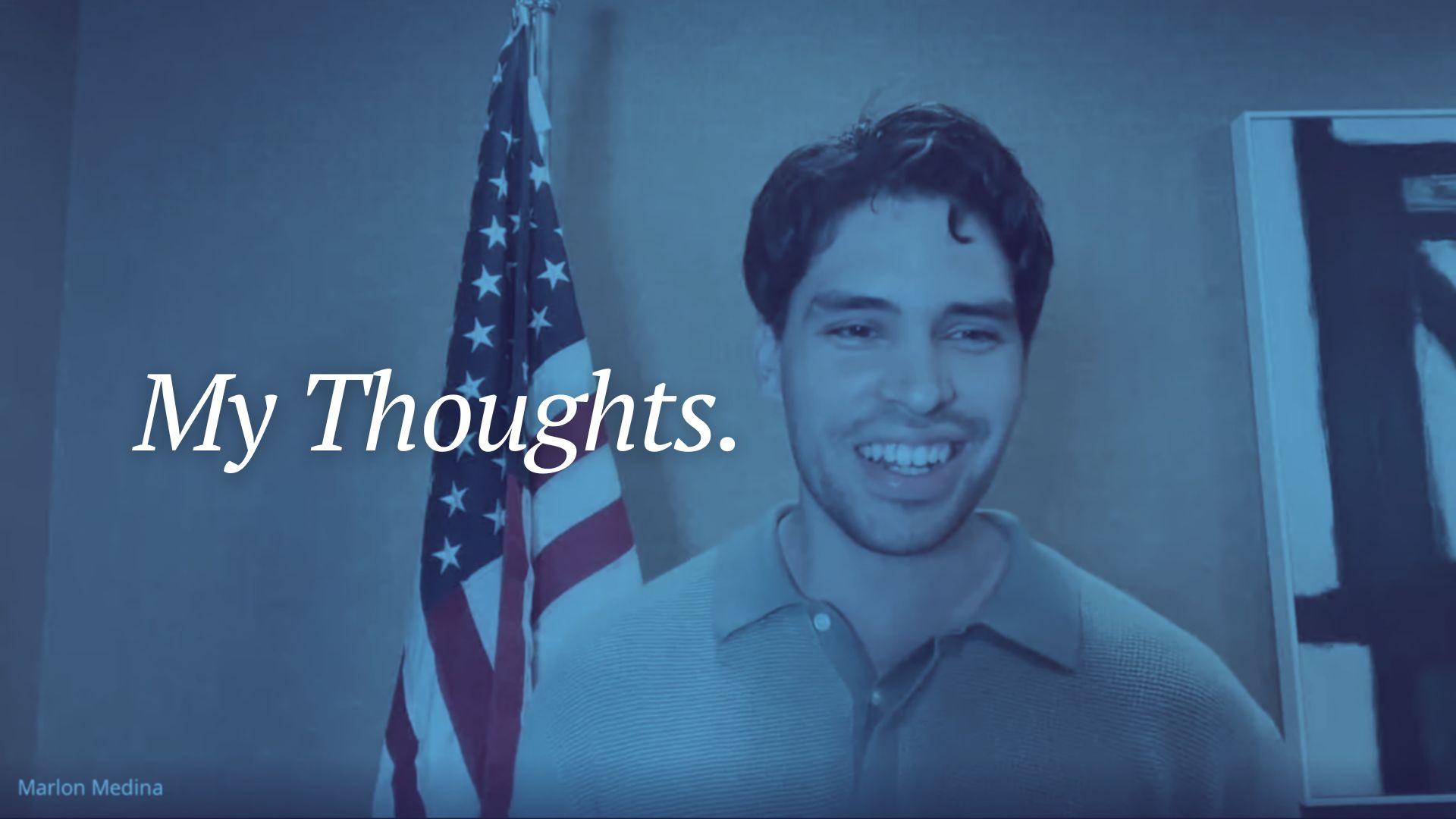
A couple of weeks ago, I had the opportunity to sit down for an interview with a reporter from Las Vegas Weekly working on a story about Gen Z's motivations and potential impact heading into the November election.
Naturally, we talked about the Gen Z Coalition of Las Vegas and the work I've been doing through GZLV. We talked about the Across the Aisle forums we were preparing for in October. We talked about candidates, political engagement, and what I'm seeing here in Nevada.
Since that conversation, we've held Across the Aisle Vol. IV, our October 1 virtual forum, and we're now preparing for Vol. V at UNLV on October 22.
The interview gave me an opportunity to think more broadly about something I've spent a lot of time considering. Hosting Volume IV gave me another opportunity to put that question into practice:
What does meaningful political participation actually look like for my generation?
I don't think the answer is simply getting more young people to vote.
Voting matters. Obviously.
But if our engagement with Gen Z begins a few months before an election and ends after Election Day, we're missing most of the picture.
I don't want to tell people what to think
One of the things I discussed during the interview was how my own role in politics has changed.
I've had experiences in partisan political environments. I've been around campaigns, candidates, political organizations, activists and people with very strong ideological convictions.
Over time, I became much more interested in creating the conditions for people to hear different arguments and decide for themselves.
As I explained during the interview:
“My contribution (to politics) became facilitating, giving people the opportunity to speak and come to their own conclusions without being forcefully influenced by outside forces.”
That idea has probably influenced GZLV more than anything else.
I have political opinions. Everyone around this space does.
But I don't think the purpose of a civic organization should be to manufacture agreement.
I'd rather create “a space where ideas can be challenged, dialogue is encouraged, and young people are engaged in the political process.”
That sounds simple. In practice, it takes work: inviting different perspectives, asking substantive questions and giving people room to answer.
Gen Z isn't one political constituency
Another subject underlying our conversation was the tendency to talk about Gen Z as though we're one predictable political group.
We're not.
Even within the relatively small universe I've encountered through GZLV, I've met young conservatives, progressives, libertarians, independents, moderates, people who are intensely political and people who are still figuring out where they fit.
That matters.
If you're trying to understand the political future of Gen Z solely by asking which party they're going to vote for, you're only asking one part of the question.
It's crucial to understand how this generation relates to politics.
Where do they get information? Who do they trust? Which institutions don't they trust? What makes them participate? What makes them tune out? What happens when you put them in a room with someone they fundamentally disagree with?
Those questions are a major reason GZLV exists.
There is a difference between political engagement and political theater
This also brought me back to something I've said about Across the Aisle from the beginning.
I wanted:
“meaningful discourse, not a ‘gotcha’ type of debate”
That distinction has become more important to me as we've continued these events.
A good political conversation doesn't have to be comfortable.
Candidates should face difficult questions. People should disagree. Someone should be able to hear an answer and decide they absolutely don't support that candidate.
But there's a difference between challenging somebody because you want to understand or test their position and creating a confrontation because you want a viral clip.
I've described Across the Aisle as:
“a powerful vetting method for constituents, particularly Gen Z”
That's still how I see it.
Give people access to the candidates. Let the candidates explain themselves. Ask better questions. Introduce competing perspectives.
Then let the voter decide.
Volume IV put that approach into practice
When I sat down for the interview, both October forums were still ahead of us. Now, Across the Aisle Vol. IV has taken place, and we have an actual conversation to look back on.
The October 1 virtual forum brought together candidates seeking education, judicial, county and legislative offices. We grouped candidates by the responsibilities of their offices, giving people a way to understand what those positions involve.
We also brought in Tony Benton, contributing questions about technology and AI, and Noah Lechuga, contributing questions about real estate and housing. I wanted the conversation to include perspectives beyond those of the candidates themselves.
We asked about spending before tuition increases, accountability and rehabilitation in the courts, accessible county services, housing affordability and the responsibilities that come with adopting AI.
Those discussions reinforced something for me: voters need enough context to evaluate an answer. What can the office actually do? Which process would the candidate change? Who would benefit, and what would success look like?
An answer can sound appealing until someone asks how it would work. That's why follow-up questions matter.
For the detailed discussion and participant list, read the Volume IV recap.
The people showing up are proving part of the point
Before the event, I was encouraged by the mix of people confirming their participation. Afterward, I was encouraged by the willingness of candidates across different offices and political perspectives to actually join the discussion.
Judicial candidates were a substantial part of the program, too. Their participation helped connect elections to the decisions made in municipal, district and family courts.
That builds on the candidates and community contributors who have participated in previous editions of Across the Aisle.
I'm deliberately not interested in building a room where everyone has the same politics.
GZLV's position remains straightforward:
“We do not endorse any candidates or political parties.”
An invitation isn't an endorsement.
Giving someone a microphone isn't an endorsement.
Allowing someone you disagree with to explain their position isn't an endorsement.
That's the point.
I think younger voters deserve more than a campaign pitch
One thing I kept coming back to after the interview is how often political engagement is discussed transactionally.
How do we get young people registered?
How do we get them to turn out?
How do we get them to support Candidate X?
Those may be perfectly reasonable questions for campaigns.
But they're not the questions I'm most interested in asking through GZLV.
I'm interested in what happens before someone decides whom to support.
Did they hear the candidate directly?
Did anyone challenge that candidate's argument?
Did they hear another perspective?
Did they understand the office they're voting for?
Did they have an opportunity to ask a question?
Did anyone actually trust them enough to let them reach their own conclusion?
That's where I think civic organizations can serve a different purpose from campaigns.
The next conversation is October 22
We're now preparing for Across the Aisle Vol. V on Thursday, October 22, at UNLV, from 6–9 PM PT.
Volume IV gave us more to build on: substantive questions, different perspectives and a clearer sense of the issues people want to understand before they vote.
The next forum gives us an opportunity to continue that work in person.
I want it to be substantive. I also want it to be engaging.
If we want people to participate in civic life, I don't think every political event needs to feel like homework. People should be able to ask a serious question, hear an unexpected answer and leave wanting to learn more.
Candidates, students, civic organizations and community members are welcome to register for the October 22 forum.
This is also bigger than November
The reporter's interest in Gen Z's potential impact heading into November is understandable. We're in an election year.
But elections aren't the only time younger people should matter politically.
That's why I've described GZLV as “an independent, locally led coalition focused on civic engagement, serious discourse and leadership development.”
Leadership development matters just as much to me as the election forums.
Eventually, members of this generation won't simply be voting for the people running these institutions.
We'll be running them.
Some already are.
That means our responsibility isn't simply to produce more voters. It's to develop people who know how to question institutions, defend their ideas, listen to competing arguments, work with people they disagree with and participate intelligently in civic life.
That's what I'm trying to build
I don't know what conclusions every person who attends Across the Aisle will reach.
I don't want to know beforehand.
My role isn't to hand someone the correct political answer.
It's to help create the environment where they can hear the arguments, ask questions, challenge what they're hearing and decide for themselves.
That's why one of the simplest descriptions we've used for Across the Aisle still feels appropriate:
“A forum for questions, disagreement, understanding & dialogue.”
After that interview and our latest forum, I think that's also a pretty good description of what I want GZLV to contribute to Nevada politics more broadly.
A better conversation—and enough respect for the people participating to let them decide what they believe afterward.
Across the Aisle Vol. IV — October 1 virtual forum
Read the recap and explore the discussion.
Up next: Across the Aisle Vol. V — UNLV
Thursday, October 22, 2026 | 6–9 PM PT
Candidates, students, civic organizations and members of the community are welcome to attend.
This post reflects subjects I discussed during an interview with Las Vegas Weekly a couple of weeks ago, alongside my reflections on the October 1 Across the Aisle forum.


